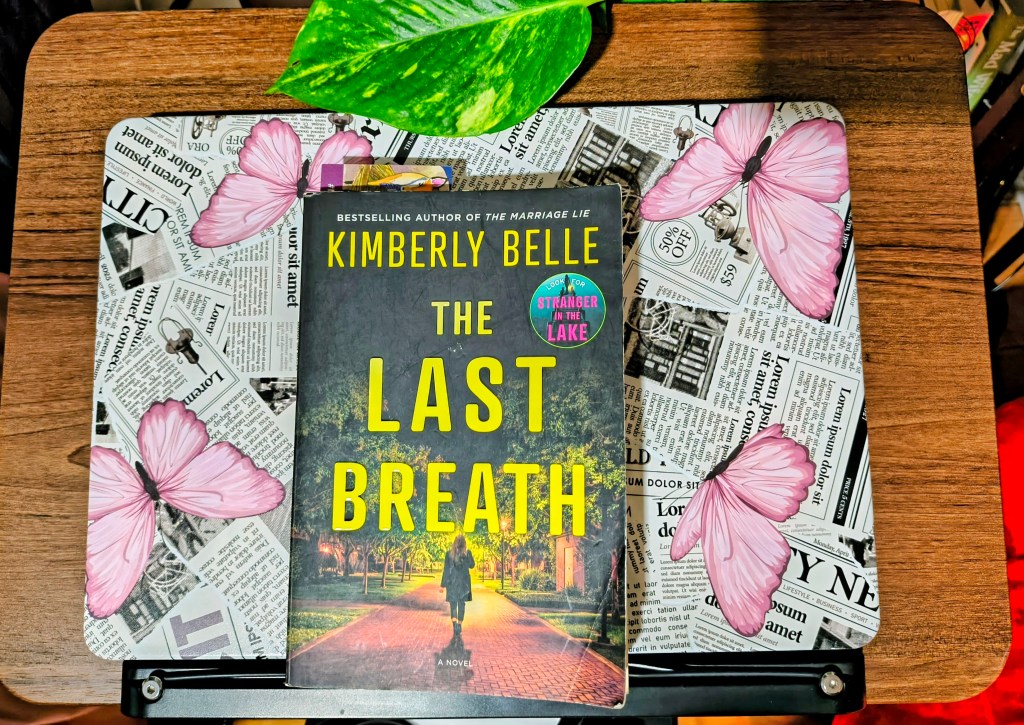
WARNING: This review contains spoilers.
The Last Breath sat on my shelf for a while until I finally decided that I should start reading the books I already had before buying more. The last part hasn’t been working so well. The themes that stood out to me from this story were denial, forgiveness, and more importantly, the children left standing in the aftermath of a parent’s actions.
One thing I will say before getting into it. I could never fully get behind the relationship dynamic between Gia and Jake. They were a wholesome couple, but Jake’s mother was Gia’s stepmother, making them step-siblings at one point. Either way, I still connected with the book on a deep emotional level.
For most of the book, Gia, the main character, wants to believe her father didn’t murder her stepmother. He was convicted and spent years in prison. Even Gia and her siblings stayed away from him because they believed he was guilty. But when Gia returns home as her father gets released from prison to die at home after being diagnosed with cancer, things really begin to fall apart.
Gia starts looking for another explanation and eventually convinces her siblings, and herself, to question what they had already believed for years.
And I understood why.
Sometimes we want to believe a better version of someone, even when the truth is right in front of us. We search for evidence that allows us to hold on to the person we wish they were. Gia wanted to believe her father was innocent, and for a while, the book made me want to believe it too.
But he wasn’t.
I love that choice. This was the first mystery I read where I genuinely expected the convicted killer to eventually be proven innocent, only to discover that he really did do it, which made me sympathize with Gia even more.
Gia’s desperate search for the truth also made me think about forgiveness.
Gia pushed her siblings to reconsider their relationship with their father even though they weren’t ready. They spent years believing their father murdered their stepmother, and Gia came home and reopened something they had already learned to live with. That made me think about how often we are told that forgiveness is necessary to heal. That holding on to anger will only hurt us and that we will regret it if we don’t forgive when the person is gone.
I have thought about that in my own life.
I haven’t forgiven my own father for what he did, and I don’t know that I ever will. At the same time, I don’t believe that has stopped me from living my life. Could I one day see him as something more than his worst actions? I honestly don’t know. Maybe. Maybe not. But I think that’s the point. Forgiveness is deeply personal, and no one gets to decide when, or if, someone is ready to give it.
Maybe forgiveness doesn’t need to happen on someone else’s timeline just because time is running out. That is why I found myself thinking so much about Gia’s siblings.
Gia left town. Her siblings stayed. They were the ones who had to continue their lives in the place where their father was known as a killer. They had to live as the children of the man who did something horrific, carrying the consequences of an act they had no part in. Angry mobs from the town even gathered outside their home, showing just how far the anger toward their father extended into the lives of his children.
The children standing in the aftermath. That part of the story resonated with me the most. When parents do something terrible, everyone focuses on what happened, who did it, and the people directly involved. But there are sometimes children left behind who had nothing to do with what happened and still have to live with the burden and consequences.
Unfortunately, I know what it’s like to be a child in the aftermath of a parent’s actions. I remember that no one really asked how I was doing through any of it. I was a kid. And even now, I sometimes wonder whether there were people in my own family who saw me differently because of something my father did.
But I think that’s why I felt so deeply for Gia’s siblings. They weren’t their father. They didn’t commit his crime. Yet they had to live in the shadow of what he had done. What’s even crazier is that oftentimes, it is a greater burden for us than for the person who committed the crime.
For me, The Last Breath became less about discovering who committed the murder and more about what happens to a family after the truth is already known. How far will we go to believe a better version of someone? And how far are people willing to go to blame the children who already had to carry the burden of having their parents commit these crimes that those very children thought they were never capable of?
★★★★☆
Questions or thoughts?

 Archives Headquarters
Leave a comment